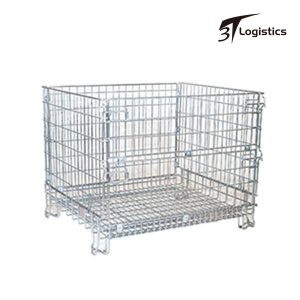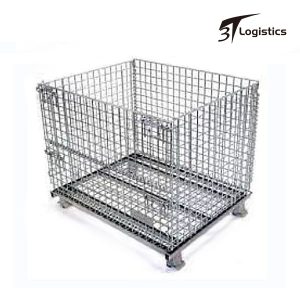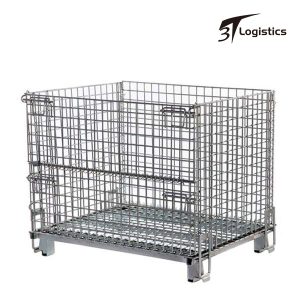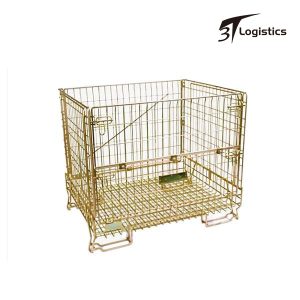
I. Market Drivers
The future market trajectory for roll cages will be determined by market forces; as the manufacturer, we are able to offer superior product quality and competitive pricing. More importantly, our market analysis has instilled great confidence in us.
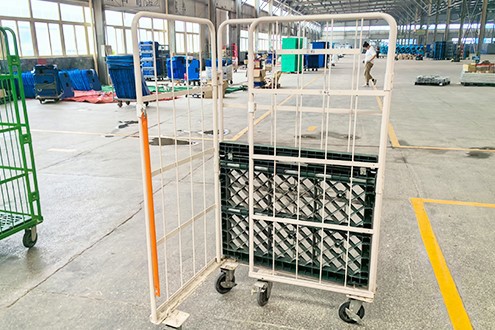
1.1 Our market analysis covers the following aspects:
(1) Rapid development of e-commerce and the retail industry
The booming e-commerce sector has directly driven the expansion of logistics and distribution networks, leading to a sustained increase in demand for efficient, flexible cargo handling equipment. As core equipment for retail store restocking and order picking in distribution centers, the demand for roll cages has grown accordingly.
(2) Demand for supply chain efficiency optimization
Enterprises are continuously seeking ways to optimize supply chain operations and reduce costs. Thanks to their mobility, high load capacity, and flexible configuration, roll containers have become a preferred solution for logistics and warehouse management.
(3) Trends toward sustainable logistics
Increasing importance is being placed on Returnable Transit Packaging (RTP). As reusable logistics equipment, roll cages offer significant environmental advantages over single-use packaging materials.
(4) Growth in automotive production
The growth of global automotive production has indirectly fueled the demand for logistics equipment. Roll cages are widely used for the handling and transport of components within automotive supply chains.
1.2 Regional Market Analysis
North America and Europe: Mature markets commanding a significant market share. Key drivers include stringent logistics safety regulations, established retail supply chain systems, and highly developed e-commerce logistics.
Asia-Pacific: The fastest-growing regional market. Rapid expansion and booming e-commerce sectors in countries such as China, Japan, and India, combined with improving logistics infrastructure, are fueling rapid market growth in the region.
Latin America and the Middle East & Africa: Emerging markets offering growth potential driven by infrastructure development and rising vehicle sales.
Ⅱ. Product Strengths and Weaknesses Analysis
2.1 Core Advantages of Roll Cages
01
High Mobility and Flexibility
Equipped with casters, roll cages can be easily moved within warehouses, distribution centers, and retail stores, significantly boosting cargo handling efficiency. Compared to fixed shelving or forklift operations, the manual push method offers greater flexibility and convenience.
02
High Load Capacity
Standard roll cages feature a load capacity of up to 500 kg and a volume exceeding 1.5 m³, allowing for the transport of large quantities of goods in a single trip.
03
Cargo Protection
The metal mesh structure provides effective protection for goods during transit, preventing damage caused by crushing or collisions.
04
Reusability
As reusable handling equipment, roll cages significantly lower packaging costs per shipment, aligning with sustainable logistics trends.
05
Space Optimization
Foldable and nestable designs drastically reduce the unit’s footprint during return trips. The foldable roll containers manufactured at our factory can reduce volume by up to 76% when empty, substantially cutting return transport costs and CO2 emissions. Furthermore, we continuously optimize our products during manufacturing; our advanced smart-stacking.
06
Standardization and Compatibility
Products that comply with international standards such as EN 12674 offer excellent compatibility, allowing for seamless integration with existing transit packaging systems.
3.2 Key Disadvantages of Roll Cages
(1) Handling Challenges
Roll cages are known for being difficult to maneuver. Pushing and steering—especially when fully loaded—require significant physical effort; prolonged operation can lead to operator fatigue and the risk of workplace injuries.
(2) Safety Hazards
Some roll cages feature sharp metal contact points that can cause injuries, such as scratches, to operators. Additionally, the braking systems on some models are inefficient, posing a risk of accidental movement.
(3) Costs of Returning Empty Units
Despite improvements offered by foldable designs, returning empty units still consumes transport space and incurs costs, particularly in long-distance shipping scenarios.
(4) High Initial Investment
Compared to single-use packaging materials, roll cages have a higher purchase cost, requiring operations of a certain scale to achieve a return on investment.
(5) Maintenance Requirements
Metal structures are susceptible to issues such as deformation and caster wear during use, necessitating regular maintenance and component replacement.
4.3 Analysis of Competing and Alternative Products
Pallets
Pallets are the most traditional unit-load carriers. Compared to roll cages, pallets have the disadvantage of requiring equipment such as forklifts for handling, resulting in lower flexibility; however, they offer advantages in terms of standardization and compatibility with automated warehousing systems.
Plastic Boxes/Containers
Plastic containers are lightweight and free of sharp edges, but their load-bearing capacity is generally lower than that of metal roll cages, and they are less efficient than roll cages for bulk cargo transport.
Mesh Containers
Mesh containers surpass roll containers in terms of sturdiness and stackability but fall short in mobility and flexibility.
New Alternative Product: Dolly Max System
Developed to meet diverse customer needs, these roll cage systems are manufactured from durable plastic, offering enhanced versatility, a safer user experience, superior maneuverability, and higher vehicle loading efficiency. Compared to standard roll cages, the Dolly Max system achieves a 20% higher vehicle fill rate, making it an ideal alternative to traditional roll cages.
| Comparison Dimension | Roll Cage | Pallet | Plastic Tote | Dolly Max |
|---|---|---|---|---|
| Mobility | ★★★★★ | ★★ | ★★★ | ★★★★★ |
| Load-bearing capacity | ★★★★ | ★★★★★ | ★★★ | ★★★★ |
| Cargo Protection | ★★★★ | ★★ | ★★★★ | ★★★★ |
| Foldability | ★★★ | ★ | ★★★ | ★★★★★ |
| Operational safety | ★★★ | ★★★★ | ★★★★★ | ★★★★★ |
| Initial cost | ★★★ | ★★★★ | ★★★ | ★★★ |