Introduction: Stillages are key carriers in material flow on production lines. When purchasing, companies often face a core question: should they choose lower-cost, faster-delivery standard stillages, or invest more budget and time in developing customized solutions? This article analyzes the applicable scenarios, cost structures, and decision-making methods for standard and customized stillages from six dimensions, helping production managers make sound choices.
1. Applicable Scenarios and Limitations of Standard Stillages
1. What is a standard stillage?
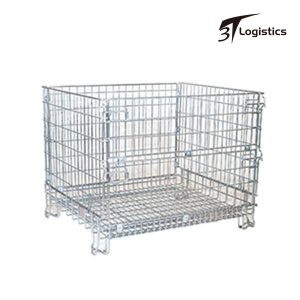
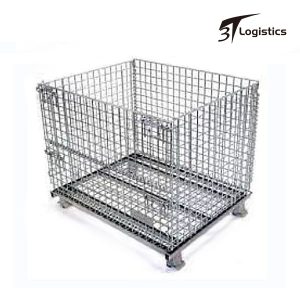
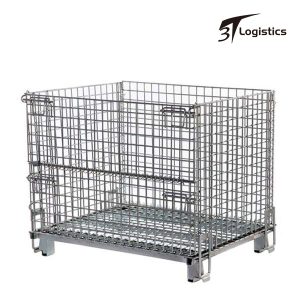
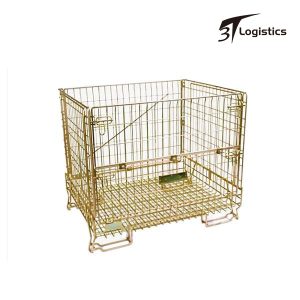
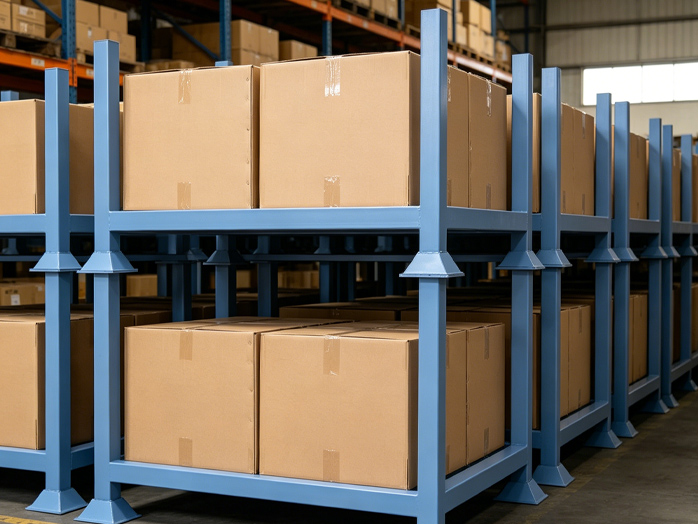
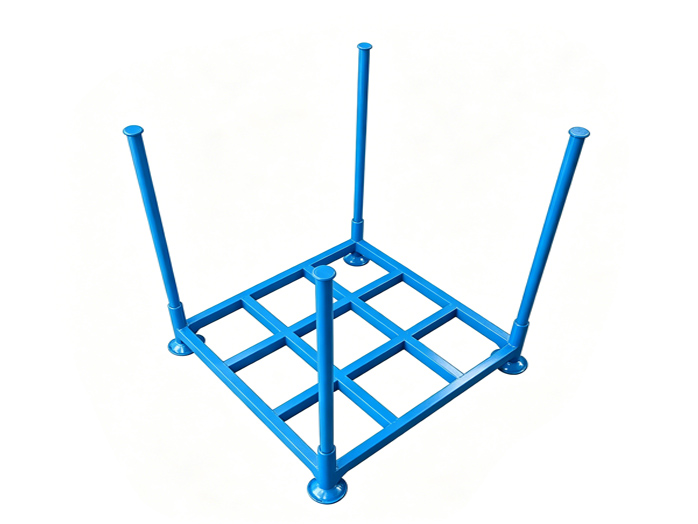
A standard stillage is a batch-produced product manufactured according to common industry dimensions and structures. Common dimensions are 1200mm×800mm and 1200mm×1000mm. There are three basic structural types: fixed, collapsible, and stackable. The load capacity of standard products typically ranges from 500kg to 1500kg. These products are kept in stock by professional storage equipment manufacturers year-round and can be shipped within 3 to 7 days after ordering.
2. Which production lines are suitable for standard stillages?
Production lines suitable for standard stillages typically have the following characteristics: material dimensions within the standard stillage range, regular-shaped materials (such as bagged, boxed, or cartoned items), and material weight not exceeding the standard load capacity limit. General parts in the automotive parts industry, standard accessories in the home appliance industry, and packaged finished products in the food industry are typical applicable scenarios. In these situations, standard stillages can directly meet material flow needs without additional design.
3. What are the main advantages of standard stillages?
The first advantage of standard stillages is low procurement cost, as batch production amortizes mold and development expenses. The second advantage is short delivery lead time, as in-stock products can meet urgent needs. The third advantage is good compatibility, as they can match most forklifts, racks, and conveying equipment on the market. The fourth advantage is easy maintenance, as replacement parts are readily available when damaged. The fifth advantage is easy secondary disposal, as standard products have a mature second-hand trading market.
4. What are the limitations of standard stillages?
When production line materials have special dimensions or shapes, the space utilization of standard stillages decreases significantly. For example, pipes longer than 1200mm need to be placed diagonally, wasting more than 30% of space. For precision electronic components or fragile items, the fixing methods of standard pallets are insufficient to prevent displacement and collision during transport. Additionally, the stacking layers of standard products are typically 4 to 6 layers, which presents limitations for scenarios requiring higher storage density.
5. When should standard stillages not be chosen?
Standard stillages are not the right choice when any of the following three situations occur: material dimensions exceed the standard range and the issue cannot be resolved by adjusting placement methods; materials have special protection requirements (such as anti-static, anti-damage, anti-rust); the production line requires precise docking with automated equipment (such as AGVs, robotic arms, conveyor lines). In these scenarios, forcing the use of standard products will lead to efficiency loss or product quality issues.
2. Applicable Scenarios and Value of Customized Stillages
1. When is a customized stillage needed?
Typical situations requiring a customized stillage include: irregularly shaped or oversized/overlength materials; easily damaged material surfaces requiring special padding; automation docking requirements for stacking or handling on the production line; need to integrate RFID, barcodes, or other tracking devices; need for use in specific environments (such as clean rooms, cold storage, acidic/alkaline environments). When standard products cannot meet any of the above requirements, the customization evaluation process should be initiated.
2. What specific problems can customized stillages solve?
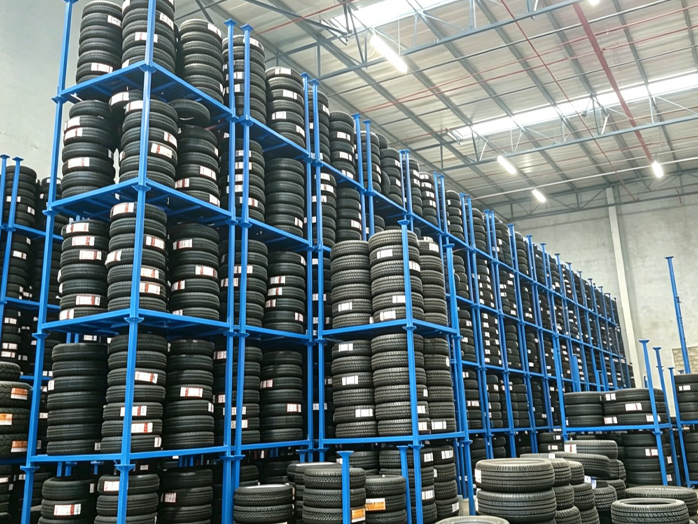
Customized design can precisely match material shapes, eliminating displacement during transport through contoured positioning slots or adjustable stops. For precision parts, EVA foam, silicone pads, or felt linings can be integrated to provide impact protection. For automated production lines, guide blocks, positioning cones, or magnetic chucks can be added to the bottom of the stillage to achieve precise docking with AGVs or robotic arms. For scenarios requiring high storage density, special-shaped stacking structures can be designed to increase stacking layers from 4 to 8 or even 10 layers.
3. What are the main cost components of customized stillages?
The cost of customized stillages includes three major components. The first is one-time development fees, including solution design, sample production, and testing validation, typically ranging from RMB 5,000 to 30,000. The second is mold fees; if stamping or injection-molded parts are involved, mold costs may range from RMB 10,000 to 50,000. The third is per-unit manufacturing cost, with customized products typically being 20% to 50% higher than similar standard products. The smaller the batch size, the more noticeable the per-unit cost premium.
4. How to calculate the return on investment for customized stillages?
Return on investment should be calculated from a full life-cycle perspective. Assume a customized stillage reduces the defect rate of each batch of products by 2%. For an annual output of 1 million units, this saves significant quality costs. If the customized design doubles the stacking height, it can reduce warehouse floor space occupancy by 50%. If automated docking is achieved, it can save the annual salary of one operator. Generally, the investment is reasonable when the annual savings from customization exceed 30% of the customization cost.
5. What are the risks of customized stillages?
The main risks of customized stillages include: improper design leading to actual usage results falling short of expectations; supplier selection errors causing delivery delays or quality defects; product upgrades making customized stillages unable to adapt to new materials; lack of interchangeability of custom parts, resulting in long wait times for repairs when damaged. Additionally, custom products have no in-stock inventory; if demand suddenly increases, the replenishment lead time may be as long as 4 to 8 weeks.
6. Which companies are suitable for customized stillages?
Companies suitable for customized stillages typically have three conditions: large production scale, allowing customization costs to be reduced through amortization; relatively stable product models, ensuring the customized stillage will not require frequent changes during its service life; having professional process or logistics engineers involved in solution design. Large automotive OEMs, white goods manufacturers, and medical device production companies are typical users of customized stillages. Small-batch production scenarios with annual output below 10,000 units are generally not recommended for customization.
3. Decision-Making Methods for Standard vs. Custom
1. What data needs to be collected before making a decision?
Four types of data should be collected before making a decision. The first is material data, including external dimensions, weight, center of gravity, surface material, and protection requirements. The second is flow data, including daily flow batches, quantity per transport, transport distance, and frequency of use. The third is environmental data, including temperature, humidity, cleanliness level of the usage area, and the presence of corrosive substances. The fourth is equipment data, including forklift fork dimensions, AGV docking accuracy, conveyor line width, and rack clear height.
2. How to determine whether a standard stillage is feasible?
Three steps to determine whether a standard stillage is feasible. Step 1: Measure the placement status of materials inside the standard stillage and calculate whether space utilization exceeds 70%. Step 2: Conduct a handling test under full load condition to check whether materials have obvious displacement or collision damage. Step 3: Evaluate whether the stacking and handling methods of the standard product are compatible with existing equipment. If all three steps are passed, the standard product can meet the requirements. If any step fails, a customized or semi-customized solution should be considered.
3. What is a semi-customized solution?
Semi-customization refers to making local modifications on the basis of standard products to reduce customization costs. Common semi-customization methods include: adding removable partitions or linings inside standard stillages; replacing the caster type of standard products (e.g., changing from nylon wheels to polyurethane wheels); welding additional hooks or stops onto standard products; spraying special colors or applying labels for production line identification. The development cost for semi-customization is typically only 10% to 30% of full customization, with a delivery lead time of 2 to 3 weeks.
4. How to apply the standard vs. custom selection matrix?
| Material Characteristics | Production Scale | Recommended Solution |
| Regular size, no special protection requirements | Any scale | Standard stillage |
| Regular size, with special protection requirements | Large batch | Full customization (add linings) |
| Regular size, with special protection requirements | Small batch | Semi-customization (removable linings) |
| Irregular size, no special protection | Large batch | Full customization (contoured positioning) |
| Irregular size, no special protection | Small batch | Semi-customization (adjustable partitions) |
| Automation docking required | Any scale | Full customization (integrated guides) |
5. What common mistakes should be avoided in the decision-making process?
Common mistake 1
Comparing only the unit purchase price while ignoring full life-cycle cost. Customized products have higher unit prices but may bring quality improvements and efficiency gains.
Common mistake 2
Over-customization, paying extra for unnecessary features, such as using heavy-duty custom structures in light-load scenarios.
Common mistake 3
Ignoring future changes, leaving no room for adjustment in the custom solution. When product dimensions change slightly, rigid custom stillages may become completely unusable.
Common mistake 4
Choosing a supplier without customization capabilities, resulting in inherent flaws in the design solution.
6. What are the key points for supplier selection and validation?
When selecting a customized stillage supplier, evaluate whether they have design capabilities, sample production capabilities, and load testing capabilities. Require the supplier to provide at least three customization cases from similar industries. Before signing a contract, request the supplier to produce one sample for actual testing. The test content includes: full-load handling test (100 cycles), stacking stability test, and docking accuracy test with automation equipment. Only proceed with mass production after the sample passes testing. The contract should clearly specify acceptance criteria, including dimensional tolerances (typically ±3mm), load deflection (not exceeding 1% of length), and delivery lead time.
4. Typical Case Studies by Industry
1. Customization case in the automotive parts industry
An automotive transmission manufacturer needed to transport irregularly shaped cast iron housings. Standard stillages caused the housings to collide with each other, resulting in edge damage. The custom solution used contoured positioning slots, with each stillage fixing 6 housings and rubber pads covering the positioning slot surfaces. Guide blocks were added to the bottom to enable automatic docking with AGVs. After customization, the housing damage rate dropped from 1.5% to 0.1%, saving approximately RMB 180,000 annually in quality costs. The per-unit cost of the custom stillage was 35% higher than the standard product, but due to the reduced damage rate, the payback period was 9 months.
2. Semi-customization case in the electronics industry
A PCB assembly company needed to transport semi-finished PCBs, requiring anti-static protection and no scratches. The standard dimensions matched the materials, but anti-static and protection functions were lacking. The semi-custom solution used a standard stillage frame with removable anti-static EVA slot plates inserted inside, each layer holding 20 PCBs. The slot plates could be replaced to accommodate different PCB thicknesses, adapting to multiple models. The semi-custom development cost was RMB 8,000, and the per-unit cost was only 12% higher than the standard product. This solution avoided the high mold costs required for full customization while retaining flexibility for product changeovers.
3. Pure standard case in the food industry
A beverage bottling company needed to transport finished cases from the filling line to an automated warehouse. The finished case dimensions were 600mm×400mm×300mm, weighing 15kg. A standard 1200mm×1000mm stillage could hold exactly 10 cases, stacked 4 layers high for a total of 40 cases. The product packaging had sufficient strength and required no additional protection. The company directly purchased standard collapsible stillages at a unit cost of RMB 280, with a delivery lead time of 5 days. The standard product fully met the requirements without any custom modifications.
4. Customization case in the chemical industry
A battery material manufacturer needed to transport electrolyte drums in an acidic/alkaline environment. The standard coating of ordinary stillages could not withstand corrosion. The custom solution used full 316 stainless steel material, with pickling and passivation treatment after welding. Arced positioning seats were designed for the round electrolyte drums to prevent rolling during transport. The custom stillage unit cost was RMB 1,500, five times that of standard carbon steel products. However, due to the special usage environment, ordinary products lasted only 6 months, while the stainless steel custom products could be used for over 5 years, resulting in a lower total life-cycle cost.
5. Compliance case in the pharmaceutical industry
A sterile preparation manufacturer needed to transport vial freeze-drying trays, requiring a dust-free, washable, non-particulate-generating solution. The welded points and coatings of standard stillages could become contamination sources. The custom solution used integral plate bending to reduce welding, with electropolishing to achieve a surface roughness of Ra≤0.4μm. A detachable structure was designed to facilitate high-pressure cleaning. This custom solution met GMP requirements and passed third-party cleanliness testing. Although the unit cost was 8 times that of ordinary products, compliance requirements made the use of standard products impossible.
6. Efficiency improvement case in e-commerce logistics
An e-commerce distribution center needed to transport small and medium-sized items of various shapes. Standard stillages resulted in low space utilization, and frequent cage changes affected picking efficiency. The custom solution used an adjustable compartment system, allowing operators to quickly change grid sizes based on daily volume. Label slots and barcode scanning windows were added to the front. After customization, storage units per square meter increased by 40%, and picking error rates decreased by 25%. This case demonstrates that customization is valuable not only in manufacturing but also in logistics and distribution.
5. Summary and Recommendations
1. Standard first or custom first?
The general principle is: if standard products can solve the problem, prioritize standard solutions. When standard products cannot meet specific needs, evaluate semi-customization. If semi-customization is still insufficient, then consider full customization. Approximately 70% of material flow requirements can be met with standard stillages. 20% of requirements can be solved through semi-customization. Only 10% of special requirements need full customization. Following this sequence helps control procurement costs while meeting functional requirements.
2. Decision checklist
| Evaluation Item | Standard Feasible | Custom Needed |
| Material dimensions within standard range | Yes | No |
| Space utilization exceeds 70% | Yes | No |
| Handling test shows no damage | Yes | No |
| No special protection required | Yes | No |
| No automation docking required | Yes | No |
| No special environmental requirements | Yes | No |
| Annual usage exceeds 5,000 units | Yes | No |
| If all 7 items above are “Yes”, choose standard stillages. If any item shows “Custom Needed”, enter the customization evaluation process. | ||
3. Phased implementation recommendations
For companies unsure whether customization is appropriate, a phased strategy is recommended. Phase 1: Purchase a small quantity of standard stillages for actual testing, recording space utilization, material damage rate, and operational efficiency data. Phase 2: Propose semi-customization modification requirements based on test data, validating effectiveness on a small scale. Phase 3: If semi-customization still cannot meet needs and the ROI calculation is reasonable, then initiate the full customization project. A phased approach reduces decision-making risk and avoids excessive one-time investment.
4. Three key points for cost control
Three key points for controlling customized stillage costs. First, establish long-term relationships with suppliers whenever possible, consolidating multiple small-batch customizations into one large-batch purchase to reduce the amortization of mold fees. Second, adopt a modular design approach, standardizing common components (such as bases and posts) while customizing only the parts that contact materials. Third, consider using adjustable or replaceable custom components so that only local parts need replacement when product models change, rather than the entire stillage.
5. Future trend: configurability
In recent years, some leading storage equipment suppliers have begun offering “configurable” stillage product lines. These products use standard-interface modular components, allowing users to freely combine post heights, number of partitions, and lining types based on material dimensions. Configurable stillages combine the low cost of standard products with the flexibility of customized solutions, representing a third option between standard and custom. It is expected that configurable stillages will capture more than 20% of the market share in the next five years, making them worth serious attention in procurement decisions.