In today’s fast-paced logistics and warehousing environments, the way goods are moved, stored, and handled directly impacts operational efficiency. One piece of equipment that has become indispensable across industries is the roll container. Also known as roll cages or roll trolleys, these wheeled, metal-framed units offer a versatile solution for transporting goods within warehouses, distribution centres, and along supply chains.
However, not all roll containers are the same. Different industries—from automotive manufacturing to retail distribution—have different requirements when it comes to handling, storage, and product protection. Understanding the various types of roll containers available is essential for making the right investment for your logistics operation.
What Is a Roll Container?
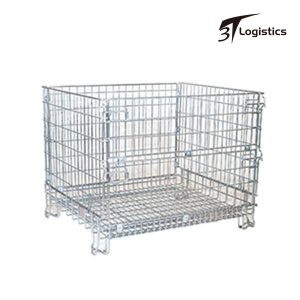
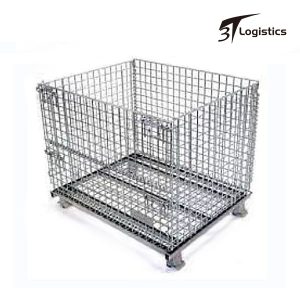
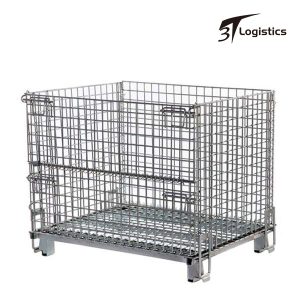
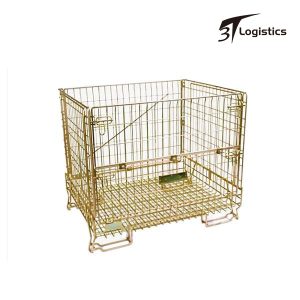
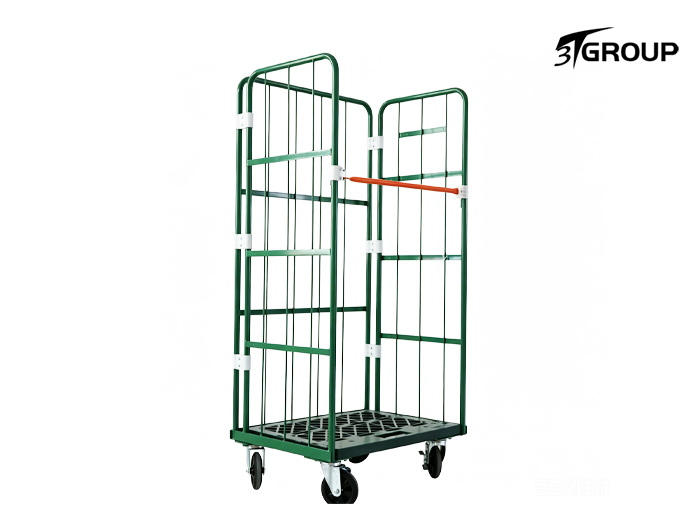
A roll container is a wheeled, typically metal-framed storage and transport unit designed to move goods efficiently through warehouses, production facilities, and retail environments. Its basic structure consists of a base, side walls (either solid, mesh, or a combination), and swivel castors that allow for easy manoeuvring in tight spaces.
These containers provide significant advantages over traditional pallets. The enclosed structure prevents goods from falling during movement, protecting both products and operators. Roll containers are used across multiple sectors, including retail and supermarkets for shelf replenishment, warehouses for internal movement and mixed-package transport, and manufacturing for moving raw materials and work-in-progress inventory. Their versatility and ease of use make them a staple in modern material handling operations.
Different Types of Roll Containers Used in Modern Logistics
Selecting the right roll container starts with understanding the main types available. Here are five common configurations used in modern logistics.
1. Standard Roll Container
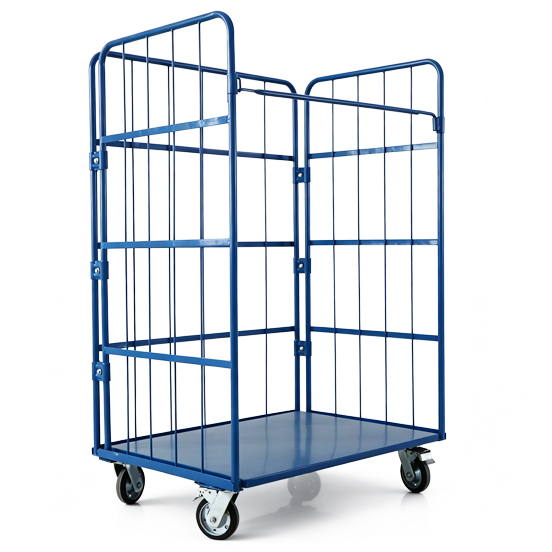
The standard roll container is the workhorse of general warehouse and retail applications. Typically featuring a four-sided mesh enclosure with a fixed frame, these containers are designed for everyday material movement. They are widely used in retail distribution for transporting goods from warehouse to shop floor and for daily internal logistics within warehouses.
Standard roll containers offer a good balance of durability, load capacity (typically handling 400–500 kg), and product visibility through their mesh sides. Their simple, robust design makes them suitable for most general-purpose logistics tasks.
2. Heavy-Duty Roll Container
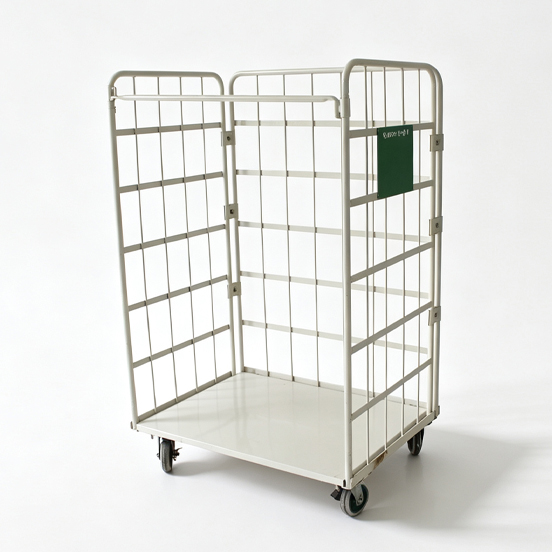
Industrial environments and applications handling heavier or bulkier goods require a more robust solution. Heavy-duty roll containers are built with stronger steel frames, thicker gauge wire, and more heavy-duty castors to support loads often exceeding 500 kg and in some cases up to 800 kg.
These containers are designed to withstand frequent use in demanding conditions, making them suitable for manufacturing facilities, automotive parts warehouses, and construction material handling. Their reinforced construction ensures structural integrity and a longer service life in high-intensity operations.
3. Foldable Roll Container
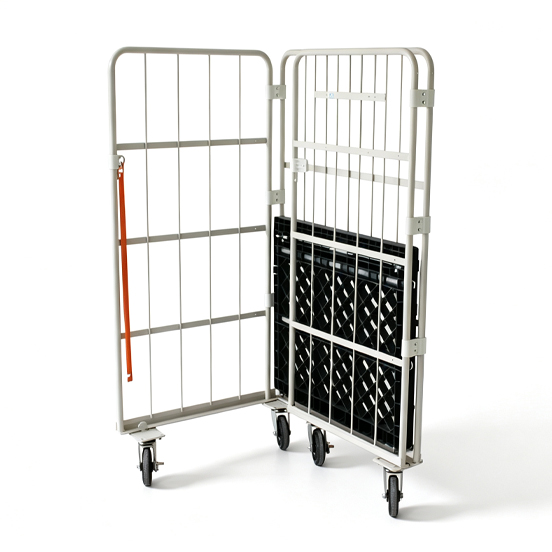
Industrial environments and applications handling heavier or bulkier goods require a more robust solution. Heavy-duty roll containers are built with stronger steel frames, thicker gauge wire, and more heavy-duty castors to support loads often exceeding 500 kg and in some cases up to 800 kg.
These containers are designed to withstand frequent use in demanding conditions, making them suitable for manufacturing facilities, automotive parts warehouses, and construction material handling. Their reinforced construction ensures structural integrity and a longer service life in high-intensity operations.
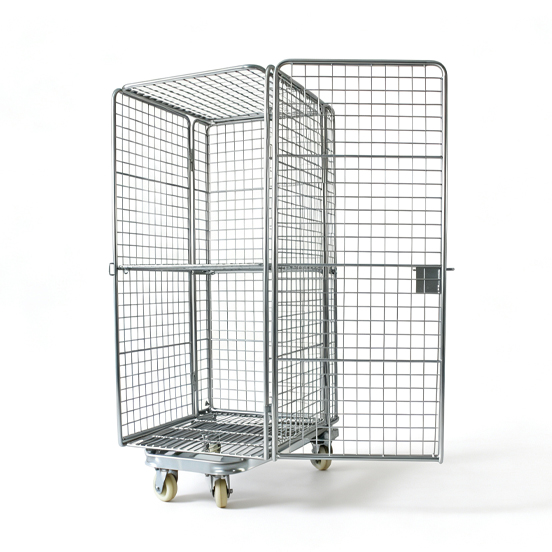
4. Security Roll Container
Certain goods require extra protection during storage and transportation. Security roll containers are designed for valuable, sensitive, or high-risk items. They typically feature four fully enclosed sides and often include a lockable lid or door.
These containers provide an additional layer of protection against theft, pilferage, and unauthorised access. They are suitable for transporting high-value products, electronics, pharmaceuticals, or any goods where security is a primary concern. The enclosed design also helps protect contents from environmental factors and handling damage.
How to Choose the Right Roll Container?
Selecting the appropriate roll container for your operation requires careful evaluation of several factors.
01
Product weight
The weight of the goods you plan to transport is the primary determinant of the required load capacity and the strength of materials needed. Heavy-duty models are essential for loads above 500 kg
02
Product dimensions
The size and shape of your products will dictate the container’s dimensions and internal configuration. Large or irregularly shaped items may need custom sizing
03
Warehouse environment
Consider the environment where the container will be used. For cold rooms or humid environments, a galvanised finish provides corrosion resistance. In food handling or cleanroom environments, stainless steel or easy-to-sanitise surfaces may be required
04
Storage space
If storage space is limited, foldable or nestable designs can significantly reduce the footprint of empty containers
05
Transportation requirements
For operations involving return transport of empty units, space-saving features such as foldability are crucial for cost efficiency
06
Customisation needs
Standard models may not always fit specific applications. The availability of custom dimensions, finishes, and additional features such as shelves, dividers, or specialised doors can make a significant difference to operational efficiency
Why Work With an Experienced Roll Container Manufacturer?
Choosing an experienced manufacturer is as important as choosing the right type of container. A manufacturer with proven expertise and modern production capabilities ensures consistency and reliability across your fleet of equipment. Here’s why it matters.
Better product design
Experienced manufacturers understand the practical demands of different industries and design products that perform reliably in real-world conditions. They can offer proven designs that balance durability, weight, and cost
Custom solutions
good manufacturer can provide tailored solutions for specific applications, whether that’s a unique dimension, a special finish, or additional features such as shelves, lids, or specialised doors
Manufacturing consistency
With modern machinery and established quality control processes, a reputable manufacturer ensures that every unit meets the same standards. This consistency is vital when managing a large fleet of containers
Quality control
Stringent quality checks at every stage of production—from material selection to welding and finishing—result in a longer-lasting product and reduce the risk of failures in the field
Conclusion
Selecting the correct roll container is not a one-size-fits-all decision. From standard and heavy-duty models to space-saving foldable designs and specialised containers for automotive or security applications, each type serves a specific purpose within the logistics ecosystem.
By carefully evaluating your operational requirements—including the nature of your goods, handling frequency, and storage constraints—you can choose a roll container that genuinely improves your logistics efficiency and warehouse operations. Working with an experienced manufacturer who can provide quality products and customised solutions ensures that your equipment supports your business for the long term.
Are you looking for roll containers tailored to your specific logistics application? 3T Logistics is a manufacturer of metal logistics equipment with experience serving customers in over 100 countries. We can discuss your requirements and offer customised solutions for your warehouse and supply chain needs.