As a manufacturer, we face significant pressure due to the complexities of the market and the diversity of application scenarios; making further adjustments to better meet market demands and customer needs is therefore crucial.
Overview
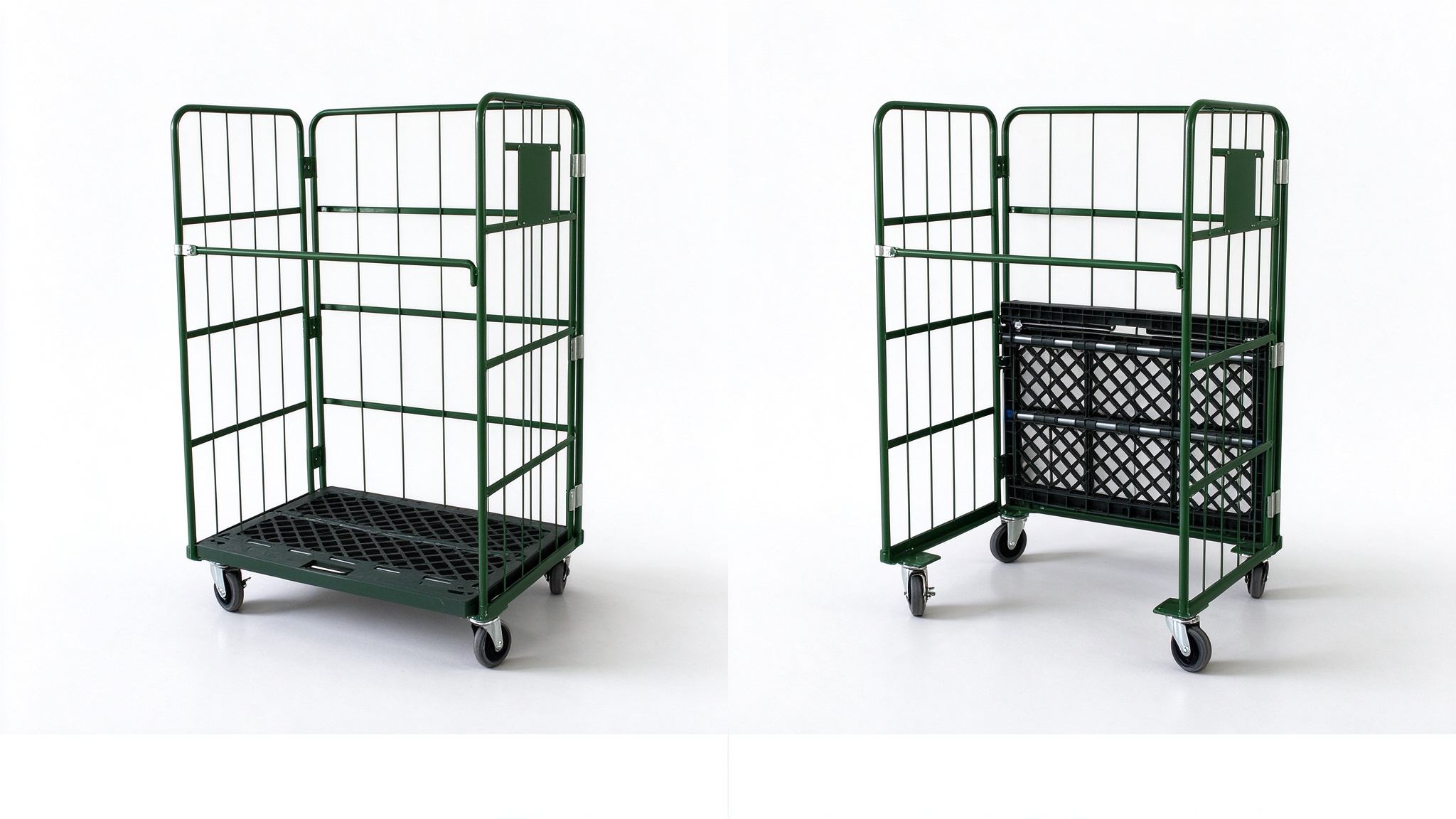
The global roll container market is undergoing profound structural changes. Data from various market research firms shows significant discrepancies in market size estimates due to differing definitions: Research and Markets values the 2024 roll container market at $1.62 billion, projecting growth to $2.18 billion by 2032 (CAGR of 3.76%); Dataintelo estimates the multi-purpose roll container market at $3.8 billion in 2025, rising to $6.4 billion by 2034 (CAGR of 5.9%); meanwhile, Prof Research places the 2025 market value between $340 million and $370 million, with a CAGR of only 1%–2%. These variations stem primarily from differing scopes of classification—broad definitions encompass all wheeled logistics containers, whereas narrow definitions refer strictly to traditional metal wire-mesh cages. Regardless of the classification method, a clear trend emerges: foldable, nestable, lightweight, and smart products are replacing traditional models and represent the fastest-growing market segments—a direction in which we are also progressively evolving.
Simultaneously, the industry faces multiple challenges: volatile raw material prices (such as steel); the dominance of established European players (e.g., Wanzl, K.Hartwall, Provost) leveraging advanced designs and brand strength; the encroachment of new plastic alternatives (such as the Loadhog Dolly Max) on the market share of traditional metal roll cages; and the widespread adoption of automated warehousing and AGVs (Automated Guided Vehicles), which impose new requirements for product compatibility. In response to these shifts, we are adjusting our own production processes. We operate our own injection molding machines and coating lines and have progressively developed numerous molds to replace metal bases with plastic ones; these plastic bases offer corrosion resistance and sufficient structural strength while being fully recyclable.
Faced with this landscape, Chinese roll cage manufacturers must transition from “low-cost mass production” to “high-value-added, differentiated products.” This report offers comprehensive strategic recommendations covering market trend analysis, product development directions, scenario-specific response strategies, production and supply chain optimization, and market and brand building.
We have conducted the following analysis regarding the challenges we currently face and the adjustments required moving forward:
Highly Concentrated Application Sectors
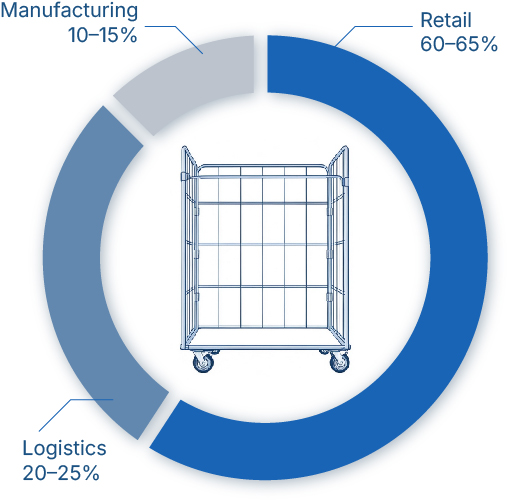
Demand for roll containers is heavily concentrated in three key sectors: retail (60–65%), logistics (20–25%), and manufacturing (10–15%). This results in a relatively clear customer profile—comprising large retail chains, third-party logistics providers, and manufacturers—but also means that demand fluctuations are closely tied to the economic health of these industries. Given this concentration, the client base consists largely of major enterprises that impose rigorous requirements on suppliers. Standards are strict across the board, covering everything from production processes and manufacturing techniques to lead times, inspection reports, and technical support. To better serve our clients, we have established in-house design, R&D, and inspection teams, ensuring strict quality control from the initial design phase through to production technology and processes.
Distinct Regional Market Landscape
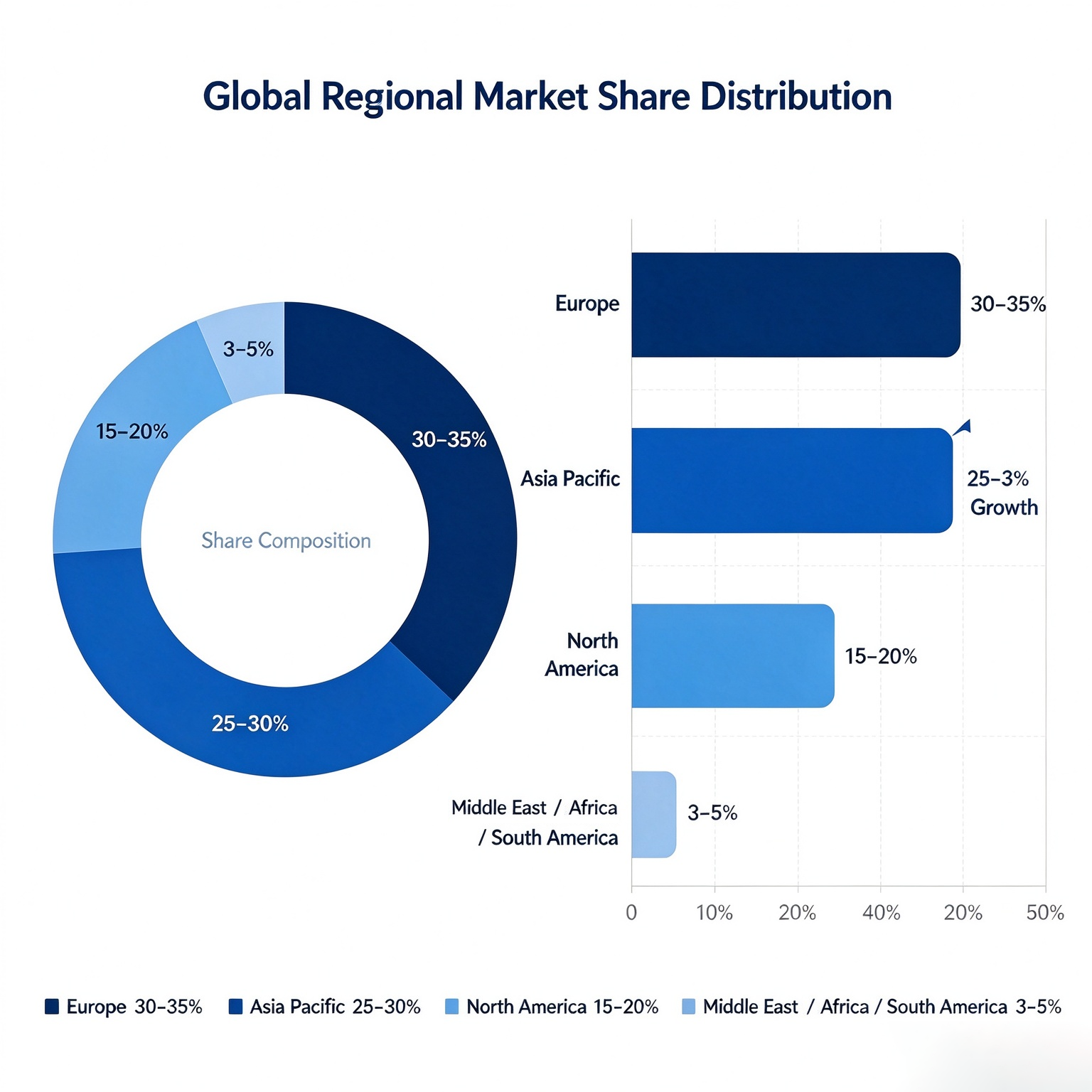
Europe holds a 30–35% market share, dominated by players such as Wanzl (Germany) and Provost (France). The Asia-Pacific region accounts for 25–30% of the market with a growth rate of 2–3%, driven primarily by China and India. North America represents 15–20%, while the Middle East, Africa, and South America collectively account for only 3–5%. The maturity of the European market and its preference for high-quality products mean that Chinese manufacturers seeking to enter this market must meet international standards in both quality and design.
Strategy
While we previously offered standard surface treatment solutions, many customers now demand greater stability and corrosion resistance for product surfaces. Consequently, galvanized products are gaining market favor; despite their higher cost, we offer hot-dip galvanized options—most of which withstand 72-hour salt spray tests—to meet diverse customer and market needs. We are also exploring other avenues and continuously expanding our services to satisfy a wider range of client requirements.
Rise of Emerging Markets
Beyond the markets already mentioned, the growth of e-commerce and logistics has driven demand for our products in regions such as Africa, Russia, and Iran. Although these markets are currently small, competition is also less intense. While entering sanctioned countries presents challenges, having direct channels and payment solutions offers a significant competitive advantage.
Strategy
We have minimized our Minimum Order Quantities (MOQs) and waived mold fees for custom new products. This enables clients to place direct orders without worrying about high volume requirements; despite the low MOQs, we maintain rapid production turnaround times.
Customer Fragmentation
In contrast to the large-scale procurement typical of the past, market shifts have made many customers familiar with the process of sourcing directly from overseas. This facilitates direct inquiries and imports. Consequently, the volume handled by large distributors is gradually declining while the number of smaller clients increases; although individual order volumes are lower, the frequency of orders is higher.
Solution
In addition to maintaining the necessary inventory to meet diverse customer needs, we offer a door-to-door shipping service that includes customs clearance at both the origin and destination. This saves customers—regardless of their location—from significant, unnecessary hassle.
Product Type Distribution
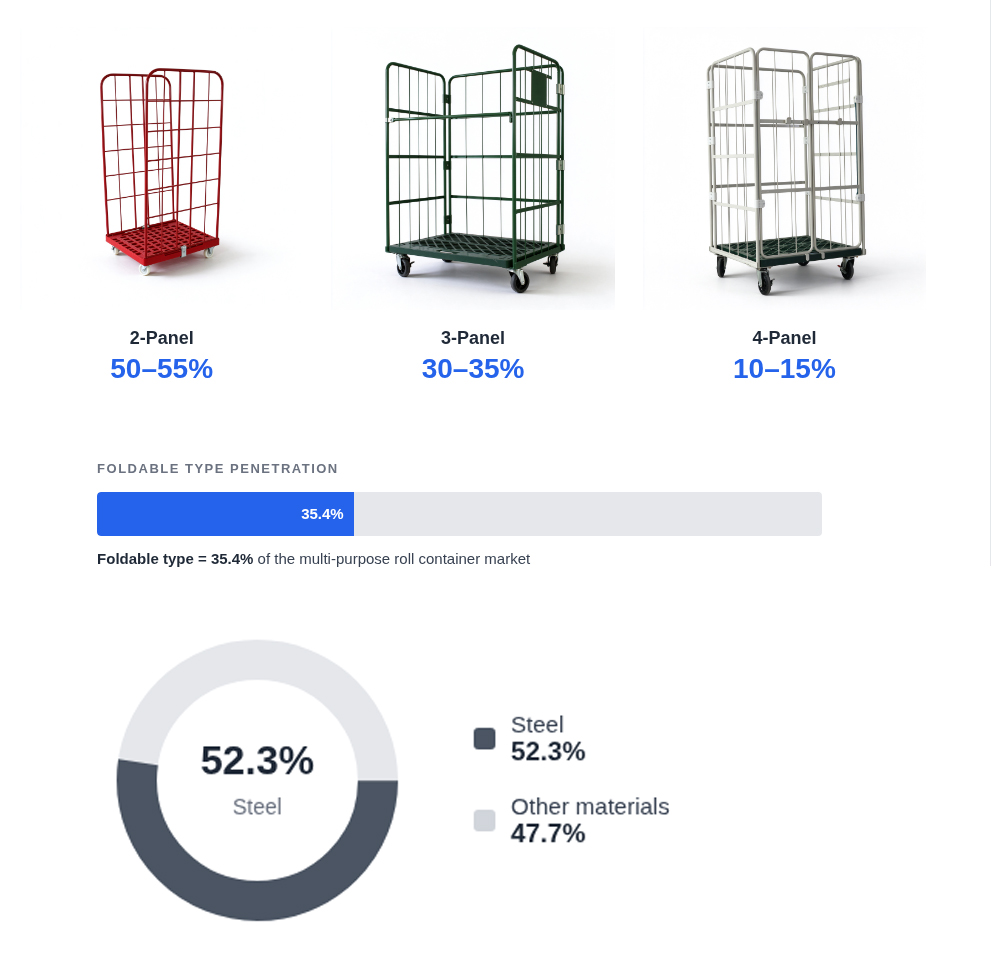
2-panel containers account for 50–55% of the market, 3-panel containers for 30–35%, and 4-panel containers for 10–15%. Foldable roll containers hold the largest share of the multi-purpose market at 35.4%. Steel remains the dominant material, representing 52.3% of revenue share.
Solution
While we manufacture a full range of products, customer demands are evolving, leading to a wide variety of styles. By flexibly combining our existing production molds, we offer greater convenience to our customers without incurring additional costs for them.