1st: Cost During Production
1. Raw Material Cost Control
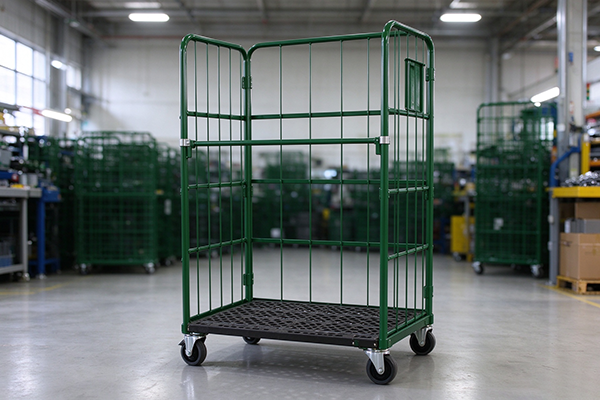
Steel accounts for 40–50% of production costs, and this proportion is steadily rising alongside raw material prices. Controlling raw material costs is a core competitive advantage for the factory.
Strategies:
Establish a steel price monitoring mechanism: Closely track price trends for key raw materials such as hot-rolled coils and cold-rolled sheets.
Strategic stockpiling: Increase inventory levels when prices are low to ensure supply stability for existing customers.
Supplier diversification: Partner with multiple steel suppliers to enhance bargaining power.
Improve material utilization: Optimize cutting layouts to minimize scrap waste.
Evaluate alternative materials: Continuously assess the cost-effectiveness of alternatives such as high-strength steel, aluminum alloys, and engineering plastics.
2. Manufacturing Process Upgrades
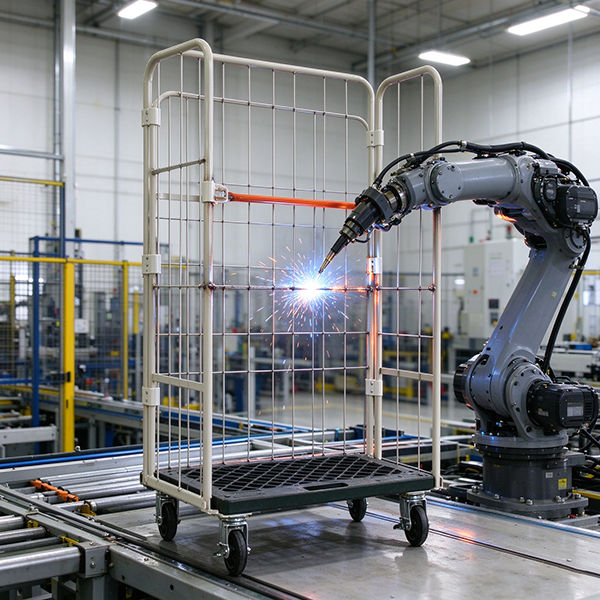
Welding automation: Robotic welding is being implemented in roll cage production, significantly boosting production efficiency and welding quality consistency. For instance, Toyota has collaborated with Yaskawa Electric to develop “Continuous Solidification Arc Welding” (SFA) technology, enabling robots to weld in any direction. While robotic processes may increase costs in the short term, they drive down costs in the long run.
Tube forming optimization: Utilize advanced tube bending and forming equipment to reduce the number of weld points while enhancing structural strength and aesthetic quality.
Surface treatment upgrades: Transition from standard spray coating to high-end treatments like hot-dip galvanizing and powder coating to improve corrosion resistance and product lifespan.
3. Flexible Production and Rapid Response
As market demand becomes increasingly diversified and fragmented, factories require flexible production capabilities:
Modular design: Enabling the production of diverse product varieties through standardized components
Rapid mold changing: Reducing switchover times between different products
Small-batch production capability: Meeting customer needs for small-volume customization
Digital management: Implementing MES (Manufacturing Execution Systems) to achieve digital control over the production process
2nd: How to Enhance Product and Corporate Influence
1. Market and Brand Building Strategies
A progression from OEM to ODM, and finally to proprietary brands
Chinese roll cage manufacturers should follow a developmental trajectory of “OEM → ODM → Proprietary Brand”:
OEM stage: Securing orders through cost advantages and accumulating production experience
ODM stage: Developing design capabilities to provide customized design solutions for clients
Proprietary brand stage: Building brand recognition and capturing brand premiums
2. Development of Online Channels
B2B e-commerce platforms serve as key sales channels for roll cages:
Optimize product displays and inquiry systems on the corporate website (e.g., www.plasticpalletssales.com)
Establish storefronts on B2B platforms such as Alibaba and Made-in-China
Provide digital marketing content, including detailed technical specifications, 3D models, and application case study videos
Implement an online product configurator to assist customers with self-service product selection
3. Certification and Standards Compliance
Certifications serve as a gateway to high-end markets:
CE certification: A prerequisite for entering the European market
EN 12674 series standards: Standards specific to roll containers
ISO 9001: Quality management system certification
Sustainability certifications: Such as product recyclability declarations, carbon footprint certification, etc.
4. Customer Relationship Management
Establish strategic partnerships with key clients and participate in their supply chain optimization
Implement a customer feedback mechanism to drive continuous product improvement
Provide value-added services (e.g., product training, maintenance guides, and lifecycle cost analysis)
3rd: Phased Implementation Roadmap
Phase 1 (0–6 months): Foundation-Building Period
| Action Item | Details | Expected Outcome |
|---|---|---|
| Market Research | Conduct in-depth research on target market product specifications, price ranges, and customer needs | Define product positioning and development direction |
| Product Audit | Conduct a comprehensive audit of the existing product line to identify areas for improvement | Generate a product improvement list |
| Certification Initiation | Initiate preparations for CE and EN 12674 certifications | Establish the certification pathway and timeline |
| Online Channel Optimization | Optimize product displays on the official website and B2B platforms | Increase online inquiry conversion rates |
Phase 2 (6–18 months): Product Upgrade Phase
| Action Item | Details | Expected Outcome |
|---|---|---|
| Foldable Product Development | Develop a foldable roll cage with a folding ratio exceeding 4:1 | Launch 1–2 core foldable products |
| Lightweighting Improvements | Reduce weight by 10–15% while maintaining a 500kg load capacity | Launch a lightweight version |
| Ergonomic Optimization | Improve braking system, push handles, and edge finishing | Enhance product safety and maneuverability |
| Customization Capability Building | Establish a modular design platform and flexible production lines | Achieve rapid customization capabilities |
Phase 3 (18–36 months): Market Expansion Phase
| Action Item | Details | Expected Outcome |
|---|---|---|
| International Market Breakthroughs | Enter European or North American markets and acquire 3–5 high-quality clients | Build an international customer base |
| Smart Product Portfolio | Develop smart roll cages integrated with RFID/sensors | Launch 1–2 smart products |
| Own-Brand Development | Establish a brand identity system and participate in international trade shows | Enhance brand awareness |
| Automation-Compatible Design | Research compatibility standards with AGVs/AMRs | Ensure products feature automation compatibility |
4th: Risk Assessment and Mitigation
| Risk Type | Risk Description | Mitigation Measures |
|---|---|---|
| Raw Material Price Risk | Significant fluctuations in steel prices | Establish price monitoring mechanisms; strategic stockpiling; diversify suppliers |
| Exchange Rate Risk | RMB exchange rate fluctuations affecting export profits | Use financial instruments (e.g., forward contracts) for hedging |
| Trade Policy Risk | Tariff adjustments, trade barriers | Monitor policy changes; consider establishing overseas plants or local partnerships |
| Technology Substitution Risk | Market share erosion by plastic substitutes | Accelerate product upgrades; invest in new material technologies |
| Customer Concentration Risk | Over-reliance on a few major clients | Expand customer base; balance customer structure |
| Intensified Competition Risk | More manufacturers entering the mid-to-high-end market | Continuous innovation; build technological barriers and brand recognition |
Conclusion
The global roll container/roll cage market is at a critical juncture, transitioning from standardized, mass-produced items to differentiated, high-value-added products. For manufacturing plants, this represents a moment that brings both challenges and opportunities.
Key Conclusion:
Foldable design represents the clearest product trend today. Products with a 5:1 folding ratio are becoming standard equipment for retail and logistics giants. Factories that fail to establish a presence in this area risk losing their share of the mainstream market.
Lightweighting offers a sustained competitive advantage. Whether achieved through high-strength steel optimization, aluminum alloy substitution, or plastic-based solutions, a 10–15% weight reduction creates significant differences in transport costs, handling, and customer appeal.
Smart technology is not a distant prospect but a current reality; features such as RFID, sensors, and AGV compatibility are shifting from “value-added extras” to “essential requirements.”
Ergonomics and safety design are keys to differentiation. In a landscape where core functionalities are converging, products that are safer, more user-friendly, and more comfortable will win customer preference.
Transitioning from “selling products” to “providing solutions” is the path to value enhancement. Customization, modularity, and full-lifecycle services enable factories to break free from the trap of low-price competition.
Certifications and standards serve as passports to high-end markets. CE certification and compliance with the EN 12674 standard are prerequisites for entering the European market; preparations should be made early.
In the face of shifting global markets, Chinese roll cage manufacturers must move beyond the traditional positioning of “low-cost production” and proactively embrace product innovation, technological upgrades, and market expansion. Key areas for product development that factories must master over the next three to five years include foldable designs, lightweight materials, smart integration, ergonomic optimization, and automation compatibility. Only by doing so can they establish a sustainable competitive advantage amidst increasingly fierce global competition.